
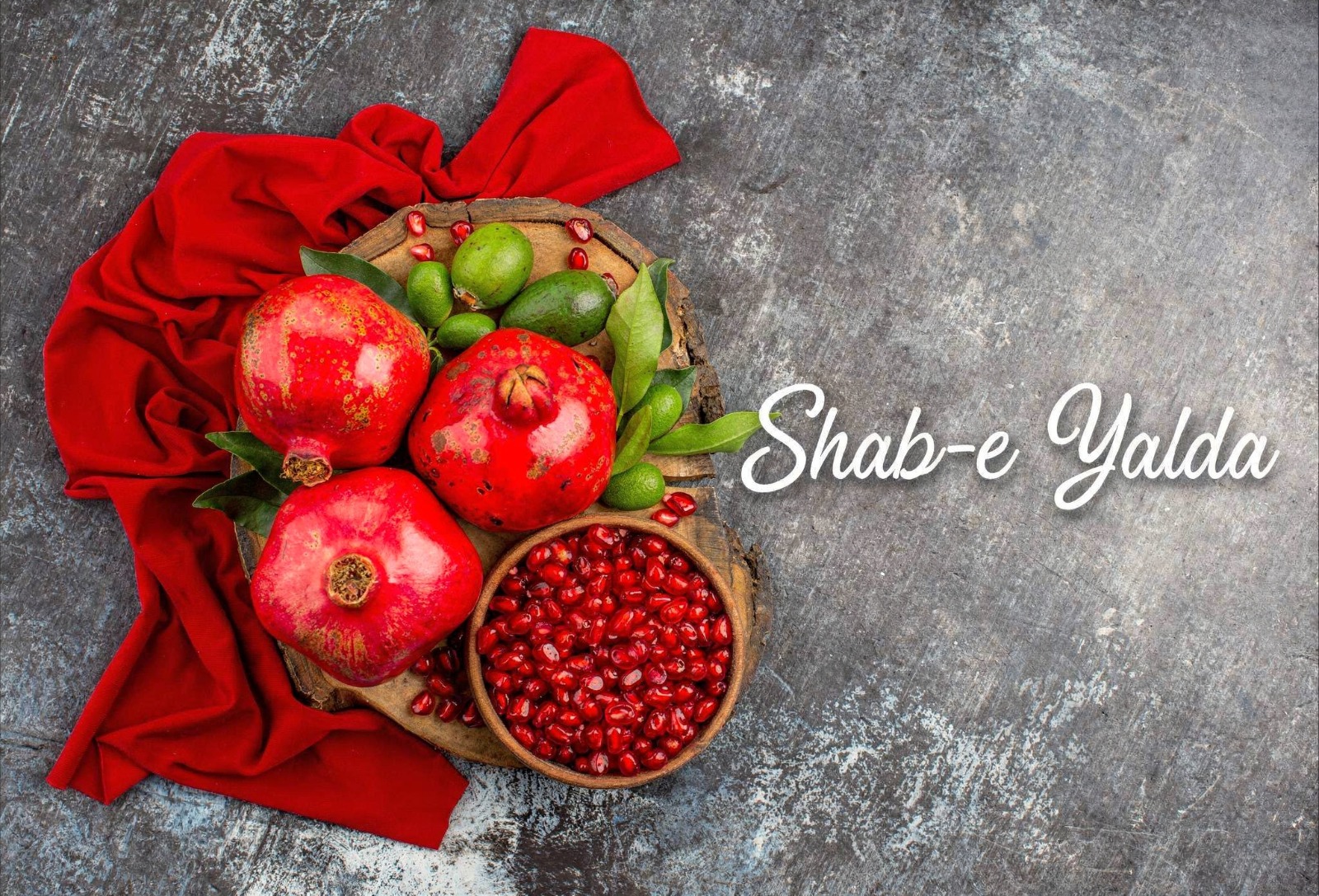
Shab-e Yalda, also known as Yalda Night, is one of the most cherished celebrations in Persian culture. Observed on the longest night of the year, usually on 21 December, it marks the winter solstice and the gradual return of longer, brighter days ahead. For generations, families have gathered on this special evening to celebrate light, hope, and togetherness.
At its heart, Shab-e Yalda is about family and community. Traditionally, relatives come together at the home of the eldest family member, sharing stories, laughter, poetry, and seasonal foods. Even today, whether in Iran or within Persian communities abroad, the spirit of Yalda remains centred on connection and warmth during the darkest night of the year.
One of the most recognisable elements of Yalda Night is the table of symbolic foods. Pomegranates and watermelon are especially significant. Their rich red colour represents the glow of the sun and the promise of brighter days. Nuts and dried fruits are also enjoyed, symbolising abundance and gratitude. For children, these traditions are not just festive details but meaningful ways to understand the deeper values within their heritage.
Another beautiful tradition of Shab-e Yalda is the reading of poetry, particularly from the works of the great Persian poet Hafez. Families often open a book of his poetry at random and read a verse aloud, reflecting on its meaning together. This custom not only preserves Persian literary heritage but also encourages reflection and shared interpretation across generations.
For children growing up outside Iran, Shab-e Yalda offers an important opportunity to connect with their cultural roots. Through stories, symbols, and shared experiences, they begin to understand that traditions carry meaning beyond celebration alone. They learn about resilience, hope, and the importance of community.
In schools and community settings, celebrating Yalda can also be an engaging way to bring language and culture together. Children can learn related vocabulary in Farsi, explore the symbolism behind the traditions, and participate in creative activities such as poetry reading or cultural crafts. In doing so, cultural education becomes both interactive and memorable.
In the United Kingdom and other parts of the world, Persian families continue to honour Shab-e Yalda with the same joy and intention as previous generations. While the setting may change, the essence remains the same: gathering together to celebrate light over darkness and unity over distance.
Shab-e Yalda reminds us that even the longest night eventually gives way to daylight. It is a celebration of hope, renewal, and shared heritage, values that continue to bring communities together year after year.
At Ariya Persian School, we believe that traditions such as Shab-e Yalda are more than celebrations; they are opportunities for children to understand who they are and where they come from. By learning the language, stories, and cultural meaning behind these special occasions, students develop a deeper connection to their heritage. Through education and community, we aim to ensure that the light of these traditions continues to shine brightly for the next generation.